Showing posts with label undocumented. Show all posts

Monday, April 11, 2016

Tax Day is a Learning Opportunity


Photo by Chris Potter


This year, on April 18, most Americans will file their tax returns while most students may not even notice this deadline has come and gone. Yet tax day is a civic-learning opportunity for students. It can be the topic of a thoughtful discussion on why and who pays taxes, how much they pay, and what benefits are received (or expected to be received) in return. Tax day also lends itself as a time to talk about the contributions undocumented immigrants make to America while exploring the myth that the undocumented do not pay taxes.

That fact is despite their undocumented status, “at least 50 percent of undocumented immigrant households currently file income tax returns using Individual Tax Identification Numbers (ITINs),” according to the Institute on Taxation and Economic Policy (ITEP). In addition, many more undocumented immigrants have taxes deducted from their paychecks, even if they do not file income tax returns. These taxes fund benefits, such as Social Security and Medicare, which undocumented immigrants are not eligible to receive.

Undocumented immigrants also pay sales, income and property taxes. For example, undocumented immigrants pay sales tax every time they buy clothing, an appliance, gas, or food at a restaurant. ITEP reports that in 2013 for example, the average effective state and local tax rate of undocumented immigrants was 8 percent, compared to 5.4 percent for the top 1 percent of all taxpayers. This translated into $11.6 billion in state and local taxes paid by the undocumented community in 2013. Immigrants, regardless of status, also pay for a main source of public school funding through property taxes – even if they are renting.

Though undocumented immigrants can receive public schooling and emergency medical care, they are not eligible for most benefits they pay taxes towards such as food stamps or health insurance under the Affordable Care Act.

You can view the estimated state and local taxes each state receives from undocumented immigrants on this interactive map.

Conversing with students about the economic contributions immigrants make in taxes extends the conversation beyond the usual, though important discussions around their contributions of cuisine, music, and art, and into a fuller understanding of how immigrants benefit our society.

Tax Day Activities and Resources

·        Start a Conversation. Find out what knowledge students have already about how taxes work, draw personal connections, and extend the conversation.
Ask students:
  • Do you have a budget? How do you earn money? How do you decide to spend it?

  • Does the government have a budget? How does it earn money? How does it decide to spend it?

  •  Do you think you pay taxes? If so, how?

  • Who should pay taxes? Who should receive tax and public benefits? Should everyone pay the same amount or should it vary according to income?


·        Have students use evidence to support their thinking. This brief fact sheet details the estimated billions of dollars undocumented immigrants pay in taxes, and how a pathway to permanent legal status would yield more tax revenue.

·        Empower yourself and others. Learn the facts about the ITIN number, its purposes and limitations, and how to apply.

Want to get more involved with our educational work by applying for our community grants, writing immigrant-themed book reviews, contributing to our blog posts or offering lessons learned in the classroom? Let us know about it! Email us at teacher@immcouncil.org and follow us on Twitter @ThnkImmigration #teachimmigration

Register for our upcoming FREE webinar this Thursday, April 14 at 4:00pm EDT “Celebrating Día at School” co-hosted with LEE & LOW BOOKS where expert panelists will discuss how to create an effective Día de los Ninos/ Día de los Libros in your school. This webinar will be most beneficial for those teaching younger students in traditional and non-traditional classroom settings.

Monday, March 28, 2016

Rethinking Home: A Powerful Look at Return Migration via Film


Contributed by Tatyana Kleyn, The City College of New York and Director & Producer of Una Vida, Dos Países (One Life, Two Countries)

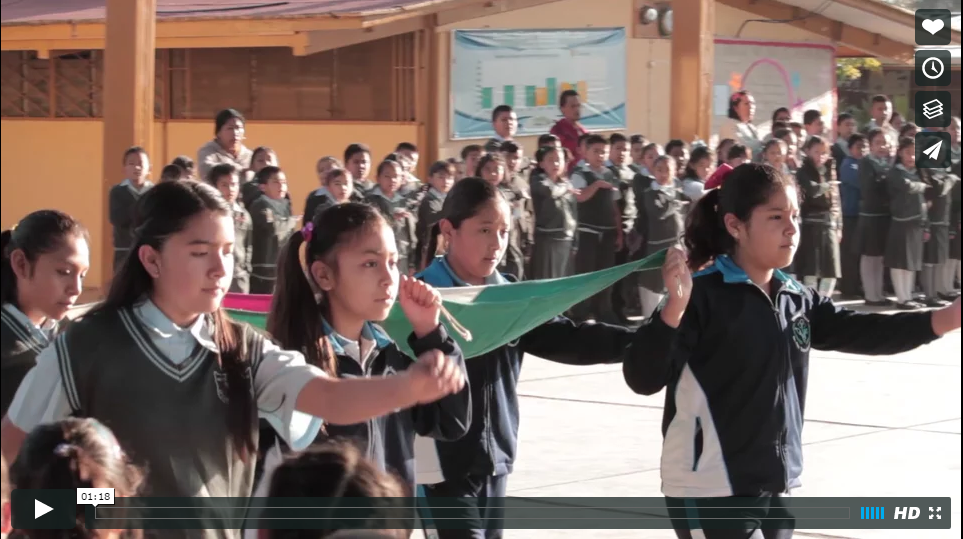
Una Vida, Dos Países: Children and Youth (Back) in Mexico is a 30 minute documentary film with free educator resources that explore the experiences of US born or raised students who have spent all or most of their lives in the US and returned with their family to Oaxaca, Mexico. The film is a rich teaching tool for conversations in schools about immigration and identity. Read a recent New York Times article featuring the film.

We drove for four days through California, New Mexico and Arizona to get to the El Paso, Texas border [with Mexico].  There I spent my last moments in the US. I turned around and said, “I will be back, I don’t know when, but it’s a promise.” I took my last breath on that side of the border and turned around, leaving not just friends and family, but a life I will never forget. - Melchor, 17 years old

People from all over the world dream about migration to the United States for “a better life.”  Some receive permission from the US government to immigrate, in the form of a green card or visa.  Others cross into the country without papers when it is nearly impossible for them to attain the required permission.  Currently, there are more than 11 million people in the US who are unauthorized, who are the topic of contentious immigration debates in our country.  Melchor (quoted above) and his family were a part this subcategory of migrants during their 10 years in the US. 

While we hear a lot about immigrants coming to the US, less is known about what happens when they leave.  The discourse is often around deportations and the rising numbers of individuals the government forces to return to their country of origin.  However, other families who are in the US without papers find that circumstances related to living undocumented also force them to return.  This phenomenon reminds us that migration is not a linear process, but a cyclical one.

Aside from deportations, there are a range of reasons families make the difficult decision to return.  These include: reuniting with elderly family members they have not seen in years (or those their children have not even met); medical issues that require long-term healthcare that undocumented immigrants cannot access in most states in the US; discrimination via state policies that prohibit undocumented immigrants from accessing drivers licenses, being banned from attending college or receiving financial aid; racism and xenophobia that many immigrants of color face on a regular basis; and the economic struggles of supporting a family while living in the shadows and being exploited of by the labor system. 

In order to share the stories of these returned families, and to focus on their US born and raised children, I was part of a team - with Ben Donnellon, William Perez and Rafael Vásquez - that created a short documentary to delve into these phenomena.   Una Vida, Dos Países: Children and Youth (Back) in Mexico explores how elementary and secondary students struggle with their identity, language learning and loss, and schooling.  The film shows some of the benefits of being “back”-such as meeting grandparents and enjoying delicious fresh Mexican food, but it also shares the challenges that returning youth face - fitting in, using Spanish for academic purposes, communicating with family who speak indigenous languages, and the economic struggles that make education an obstacle for them.  
View the film trailer.

A group of transborder high school students, who call themselves “The New Dreamers,” meet to discuss the realities and challenges of being back in Mexico. Photo Credit: Ben Donnellon   


The goals of the film are to raise awareness about this growing population of students, some of whom are dual US and Mexican citizens.  The film is also accompanied by a Spanish-English bilingual curriculum for secondary schools in the US, Mexico and beyond.  The lessons prepare the students to watch the film and to delve deeper into the areas of identity, language, economics and policies.

A resource guide for educators in Mexico, whose students cross literal and figurative borders throughout their lives, also accompanies the documentary. These include the most obvious border, the artificial division between the US and Mexico, in addition to borders that are crossed from one state to another while living in the US.  Another border students cross daily is languages, such as English, Spanish and in the case of some of the families in the film, Zapotec (an indigenous language spoken in certain parts of Mexico).  These students also cross cultural borders as well as those across school systems.  For all these reasons I use Lynn Stephen’s (2007) term transborder to describe them.

Because these students are now (back) in Mexico does not mean that is where they will stay.  Those who are dual citizens of the US and Mexico, (if they were born in the US to at least one Mexican citizen parent), can freely travel between the two nations as long as their documentation is up to date.  Many who were undocumented in the US, still see that country as their home, and many hope to return.  However, applying and receiving papers or crossing countries’ border without authorization again are both tremendously costly and difficult for Mexicans.  But regardless of where they will be in the future - the US, Mexico or another nation - they bring with them a wealth of resources including their multilingualism, cross-cultural capabilities and in-depth understanding of how national and transnational policies – or the absence of them – impacts people at the most human level. 

The film and accompanying resources can be accessed via: www.unavidathefilm.com The film and resources were funded by the US-Mexico Foundation.

For additional updates on the film, screenings and the transborder students, join “Una Vida Dos Paises The Film” on Facebook and on Twitter.

Stay Connected
We’re presenting at Share My Lesson’s Ideas & Innovations Virtual Conference on April 5th, 2016 at 8:30pm EST. Register for our free interactive session “So You Want to Teach about Immigration?” at this link: http://bit.ly/22zBOnk and please share broadly.
Email us at teacher@immcouncil.org and follow us on Twitter @ThnkImmigration.